

In the realm of chemical laboratories, maintaining a clean and contamination - free environment is of utmost importance. One crucial piece of equipment that often comes into play is the air shower. As a supplier of Single Blow Air Showers, I am frequently asked whether a single blow air shower can be used in a chemical laboratory. In this blog, we will delve into this question, exploring the features, advantages, limitations, and suitability of single blow air showers in a chemical laboratory setting.

Understanding Single Blow Air Showers
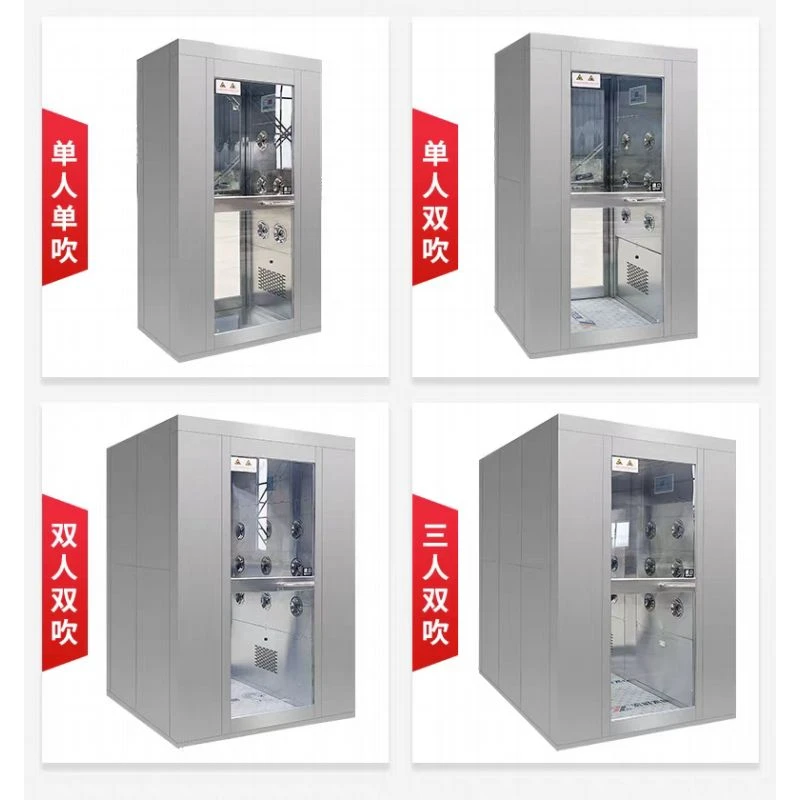
A single blow air shower is a type of air shower that uses a single - direction airflow to remove dust and contaminants from personnel or objects entering a controlled environment. The air is typically filtered through high - efficiency particulate air (HEPA) filters, which can capture particles as small as 0.3 microns with a high degree of efficiency. When a person or an object enters the air shower, the high - velocity air blows from one side, dislodging and carrying away the surface contaminants.
Features of Single Blow Air Showers
- Simple Design: Single blow air showers have a relatively straightforward design. They usually consist of a chamber, a blower unit, HEPA filters, and nozzles. This simplicity makes them easy to install and maintain.
- Cost - Effective: Compared to more complex air shower models, single blow air showers are generally more affordable. This is an important consideration for chemical laboratories, especially those with budget constraints.
- Space - Saving: Their compact design allows them to fit into smaller spaces. In a chemical laboratory where space is often at a premium, this can be a significant advantage.
Advantages of Using Single Blow Air Showers in Chemical Laboratories
- Basic Contamination Control: For many chemical laboratories, a single blow air shower can provide an adequate level of contamination control. It can effectively remove loose dust and debris from the surface of personnel and equipment, reducing the risk of introducing contaminants into the laboratory environment.
- Quick Decontamination: The single - direction airflow can provide a relatively quick decontamination process. This is beneficial in a laboratory setting where time is often of the essence, and personnel need to enter and exit the controlled area efficiently.
- Versatility: Single blow air showers can be used for a variety of purposes in a chemical laboratory. They can be used to decontaminate personnel before entering a cleanroom, as well as to clean equipment and materials.
Limitations of Single Blow Air Showers in Chemical Laboratories
- Limited Coverage: The single - direction airflow may not provide complete coverage of the person or object being decontaminated. Areas on the opposite side of the airflow may not receive as much cleaning, leaving some contaminants behind.
- Ineffective Against Stubborn Contaminants: In a chemical laboratory, there may be contaminants that are more difficult to remove, such as chemical residues or sticky particles. A single blow air shower may not be as effective in removing these types of contaminants compared to more advanced air shower models.
- Lack of Uniformity: The airflow in a single blow air shower may not be as uniform as in other types of air showers. This can result in uneven cleaning, with some areas being cleaned more thoroughly than others.
Suitability of Single Blow Air Showers in Different Chemical Laboratory Scenarios
- Low - Risk Laboratories: In chemical laboratories where the risk of contamination is relatively low, such as teaching laboratories or research laboratories with less stringent cleanliness requirements, a single blow air shower can be a suitable choice. It can provide a basic level of contamination control at a reasonable cost.
- Entry - Level Cleanrooms: For entry - level cleanrooms in chemical laboratories, a single blow air shower can serve as an initial barrier to prevent the introduction of contaminants. It can be used in combination with other cleaning and decontamination measures to maintain a clean environment.
- Small - Scale Operations: In small - scale chemical laboratories or those with limited resources, a single blow air shower can be a practical solution. Its simplicity and affordability make it a viable option for these types of operations.
Comparison with Other Types of Air Showers
- Corner Air Shower: Corner Air Shower is designed to fit into corners, which can be useful in laboratories with limited space. Unlike single blow air showers, corner air showers often have multiple air outlets, providing more comprehensive coverage. However, they may be more expensive and require more complex installation.
- Rotating Nozzle Air Shower: Rotating Nozzle Air Shower uses rotating nozzles to direct the airflow in different directions. This can provide more uniform cleaning and better coverage compared to single blow air showers. However, the rotating mechanism adds to the complexity and cost of the air shower.
- Air Shower Channel: Air Shower Channel is a larger - scale air shower system that can accommodate multiple people or large equipment. It typically has multiple air blowers and a more sophisticated airflow design. While it offers high - level contamination control, it is also more expensive and requires more space.
Considerations for Using Single Blow Air Showers in Chemical Laboratories
- Contaminant Types: Before deciding to use a single blow air shower, it is important to consider the types of contaminants present in the laboratory. If the laboratory deals with highly sticky or chemical - based contaminants, a single blow air shower may not be sufficient.
- Cleanliness Requirements: The cleanliness requirements of the laboratory also play a crucial role. If the laboratory has strict cleanliness standards, such as those in a pharmaceutical or semiconductor research laboratory, a more advanced air shower system may be necessary.
- Budget and Space Constraints: As mentioned earlier, budget and space are important factors. If the laboratory has limited funds and space, a single blow air shower can be a practical choice.
Conclusion
In conclusion, a single blow air shower can be used in a chemical laboratory, especially in low - risk, small - scale, or entry - level settings. It offers basic contamination control, cost - effectiveness, and space - saving advantages. However, it also has limitations in terms of coverage, effectiveness against stubborn contaminants, and uniformity. When considering using a single blow air shower in a chemical laboratory, it is essential to evaluate the specific needs of the laboratory, including the types of contaminants, cleanliness requirements, budget, and space constraints.
If you are interested in learning more about Single Blow Air Shower or other air shower products, and would like to discuss potential procurement, please feel free to reach out. We are here to provide you with detailed information and assist you in making the best decision for your chemical laboratory.
References
- "Cleanroom Technology Handbook", John Wiley & Sons
- "Air Shower Design and Operation Guidelines", Institute of Environmental Sciences and Technology